
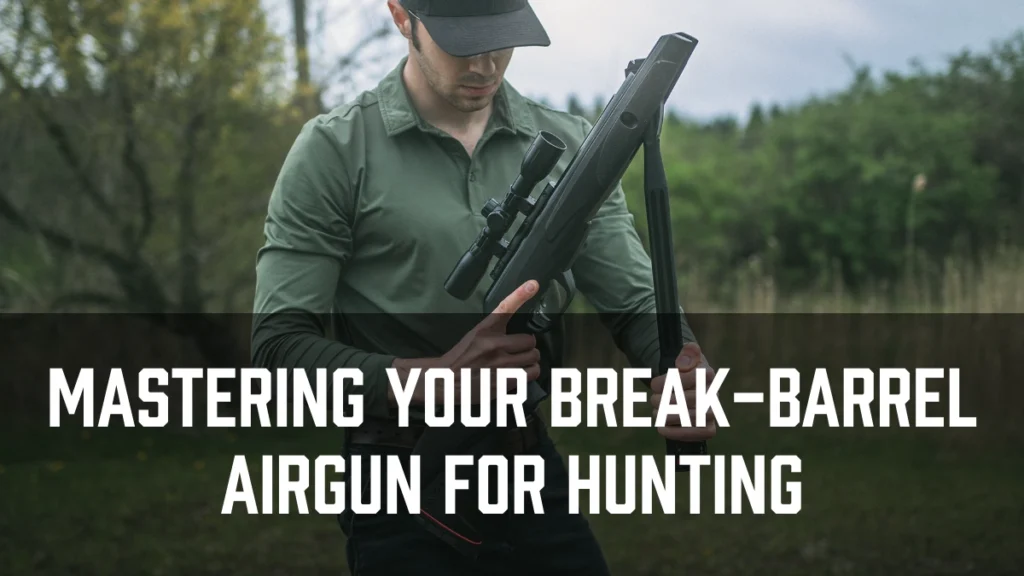
Gamo makes some amazing break barrel airguns. In the hunting world, the Gamo Hunter Extreme may be one of the most influential break barrels of all time. Many hunters looked at the photos and read the stories about the Gamo Hunter Extreme, with its beautiful styling and impressive performance, and were immediately inspired to jump into the world of break-barrel airgun hunting.
There’s more than meets the eye when break barrel airgun hunting
Today, guns like the Gamo Hunter Extreme Ultimate, Gamo Swarm Magnum, Gamo Swarm Bone Collector, Gamo Swarm Maxxim, and many other models continue to inspire shooters to give break-barrel airgun hunting a try. Our goal with this article is to help you get the most out of your break barrel and see success with your airgun hunting experience.
The most common issue new airgunners face is understanding the physics of break-barrel airguns and how they affect the shooting cycle. We’ll be brief here, but it’s very important to help you understand the technique we’ll discuss later.
A typical firearm recoils rearward when fired. Recoil is often referred to as the “kick” of a gun. When compared to firearms, airguns do not really produce much recoil. Some do, but most are very gentle. However, break-barrel airguns have another dynamic due to their design.
Spring-powered break-barrel airguns, including gas ram guns, generate compression with a piston that’s driven forward by a gas ram or spring. The piston can be quite heavy and will impact the front of the compression chamber at the end of its stroke. The impact of the piston against the front of the compression chamber drives the gun forward, creating a reaction we call “reverse recoil.” It’s this reverse recoil we need to address through proper equipment and shooting technique.
Gamo often bundles a basic 3-9×40 duplex scope and mounting solution with their airguns. While they are not fancy, they are specifically designed to withstand the reverse recoil effect. Scopes, regardless of their cost, that are not specifically engineered to withstand reverse recoil will be quickly destroyed by even a standard powered spring airgun. If you are adding a scope to your airgun, make sure that it’s “springer rated” and designed for both rearward and forward recoil. Also, make sure that your mounts are equipped with a stop pin so they can lock into the rail and prevent the scope from moving.
The reason reverse recoil is so problematic is that the gun is moving while the pellet is still in the bore, which can put the muzzle in a different location for each shot. Simply changing the position of your front hand on the forearm can lead to dramatic variations in your point of impact and vertical stringing. Fortunately, we have a solution.
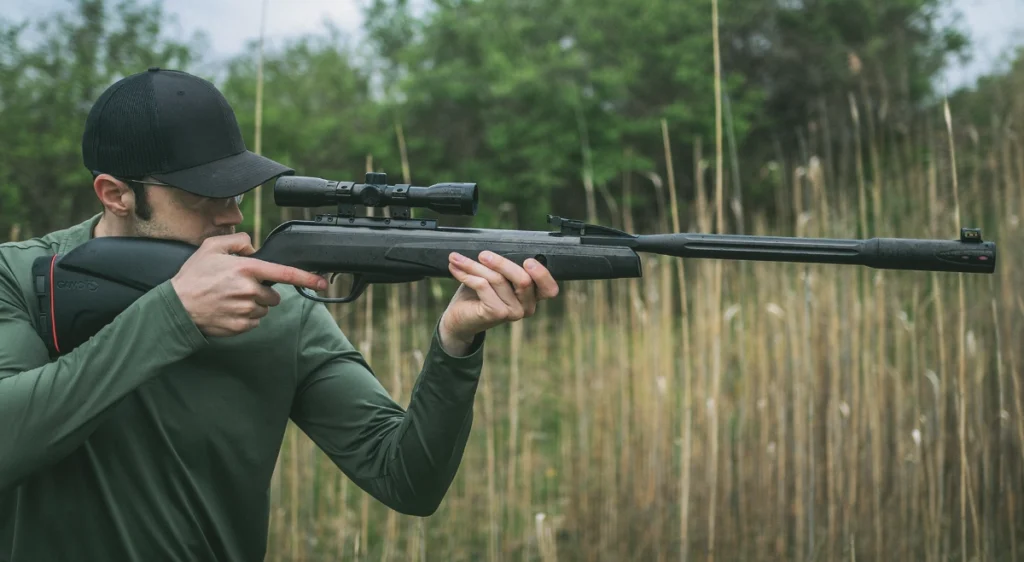
The recommended shooting technique for break-barrel airguns is called the “artillery hold.” The basic concept is to allow the gun to recoil freely while creating an extremely repeatable hold position. That way, the muzzle should be in the same location each time.
Here’s how it works. Take your off hand and find the balance point of the gun on the forestock. The center balance point may be right next to the trigger guard or further down the forearm, but wherever it is, make note of it and lay that point on the gun in the palm of your hand. Do not grip the gun tightly; you are just creating a consistent resting point. Also, don’t use a bag or rest. This technique requires you to hold the gun. It may seem counterintuitive, but it’s the best method we’ve found over the 20+ years of shooting break-barrel airguns.
Next, gently pull the gun into your shoulder and find a comfortable cheekweld and eye relief position. Again, don’t grip it tightly or try to control the recoil forcefully. You can’t.
When you are set and ready, gently squeeze the trigger. Take a few more shots while you get to know how the gun feels in the hand and moves when fired. Make a specific note of where you place your hands, how tightly you grip the stock with your trigger hand, the pressure you place on the cheekpiece, etc. All of this matters because it impacts the movement of the gun during the shooting cycle. The more consistent you can be with your hold and technique, the more accurate you will be on target.
Now that you have the basics on how to achieve repeatable accuracy with your break-barrel rifle, it’s time to work out how to translate it all into use in the field. We don’t carry our bench and bags with us, but we may use shooting sticks or lean against a tree. If you are going to hunt with your spring airgun, then you need to spend time shooting it in these alternate positions.
If you only shoot and sight in at the bench and then go straight to the field, you may find that you are unable to hit your target. It’s probably not the gun or your scope; it’s going to be your technique. If you want to be successful on your hunt, be sure to work out your hold and validate repeatable results with the gear as you’ll be using it in the field. Many hunters disregard this step and then blame their gear for their lack of success. Don’t make the same mistakes.
We really like the Gamo Knock-Down targets because they provide immediate feedback when you hit the skill zone. Shooting an analog is vastly different from shooting paper, and it has been a great tool in helping us verify our technique before taking shots on the real thing.
Now that you have a better understanding of how to get repeatable accuracy from your break-barrel spring airgun, get out and make it happen! And if you need help picking the right gear for the job, please don’t hesitate to reach out to the folks at Gamo, Crosman, or Benjamin to help you get what you need. They are always there to help!