
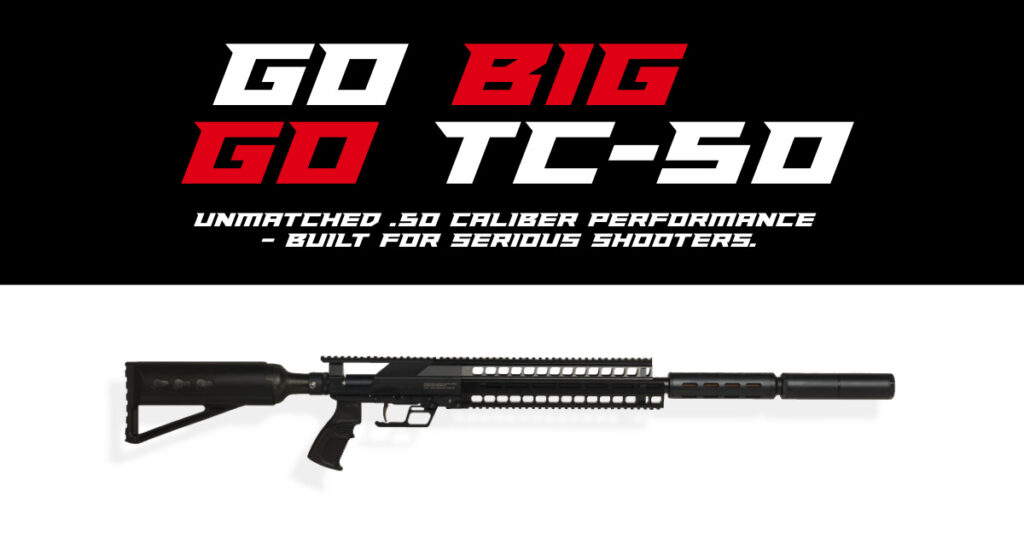
Are you a big game hunter looking for a new challenge? It may be a great time to experience big-bore airgunning. In this article, we’ll discuss some of the challenges hunters face when switching from firearms to airguns and how to overcome them so that your first hunt is successful. Let’s get started.
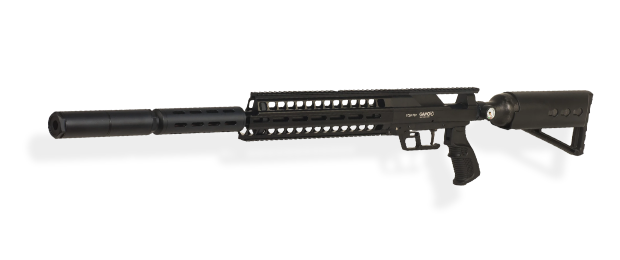
One of the first mistakes, especially for experienced firearms hunters, is assuming their airgun is going to perform like a firearm. While the form factor is the same, the power and flight time differ significantly. We won’t get into all the specific number values, but here are the principal points that make airguns more challenging.
Airguns produce only a fraction of the power of a modern hunting rifle. This means that your shot placement has a much smaller margin of error. Your shot needs to hit the vitals and create a significant enough wound channel to get the job done, hopefully with the first shot.
Flight time is one of the biggest errors that new big-game airgun hunters make. Your Gamo TC50 may shoot slugs at 700 to 800 feet per second. That’s fast for a big-bore airgun, but that’s a snail’s pace compared to your typical 30-06 pushing 2700 to 2900 feet per second. But why does that matter?
If the speed of sound is, say, 1100 feet per second, then the report of your airgun is going to reach your intended target before your slug. Animals are usually twitchy in the wild. When they hear a sound, they can react and move quickly, and if they move while your slug is in flight, you probably will not hit your target where you intended. This leads to wounded animals that often run away and die slowly out in the field. An ethical hunter never wants to leave a wounded animal out in the woods. The key to mitigating this is to reduce your slug’s flight time. Since you can’t make the slug go faster, you need to reduce the distance it needs to cover.
When you consider that the Gamo TC50 shoots slower than a high-caliber rifle and has less power, it’s better to adopt more of a bow-hunting method. Bow hunters get in close and work to make every shot count.
Know your gun, know your game, get in close, pick your shot.
The ideal hunting range for most big-bore airguns is between 35 and 50 yards. This reduces flight time and increases potential accuracy. While getting in close takes more effort, it’s also what makes airgun hunting more challenging and rewarding with each successful hunt.
Trigger time and game research are critical. You need to make that first shot count. Successful airgun hunters research the best shot placement and spend time testing and practicing with the same setup they’ll use in the field. Planning and practice are key to success.
Getting to know where your first, second, and third shots are going to hit is all part of the learning curve. Generally speaking, airguns like the Gamo TC50 will put their first 2 or 3 shots touching at 50 yards. If you need to take more shots, you may need to adjust your point of impact. Hopefully, your first shot lands true, and you won’t need any additional shots, but if you do, having that practice under your belt can help ensure your success in the field.
We’ve coached several hunters through the transition from firearms to airguns. It’s not uncommon for their first few attempts to be far more challenging than they had expected. But when it all starts to come together with clean, successful kills, then it’s all the more satisfying.
If you are looking to add airguns to your big game hunting expereicnes reach out to us here at Gamo USA. We have the guns, the gear, and the experience to help you make your airgun hunt a total success!